What Is Railway Platform Coping and Why It's Critical for Passenger Safety
April 25, 2026Tens of thousands of individuals move through the railway platforms each day. From people hurrying for their train connections to travelers carrying luggage and cleaning personnel moving heavy tools. All this movement occurs in one place: at the edge of the platform.
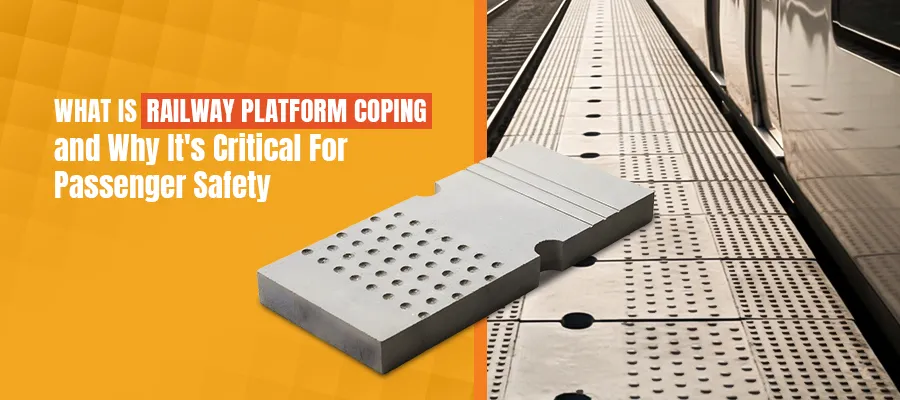
This is where platform coping comes into play. It is the strengthened concrete boundary along the platform, indicating the demarcation line between the passenger area and the rail zone. Not a decorative trim. A structural safety component that prevents accidents and platform deterioration.
What Railway Platform Coping Actually Is
Platform coping is a precast concrete edge installed along the entire length of railway platforms. It marks the boundary between passenger zones and track areas.
Think of it as a specialized kerb stone, but engineered for railway conditions. Luggage trolleys crash into it. Cleaning machines scrape against it. Wheelchairs bump it. The occasional passenger missteps onto it. Standard kerbing would crack within months under this treatment.
Railway authorities specify exact dimensions for height, width, and edge profile. When it is too low and passengers don't register the boundary clearly, when it is too high and it trips people. The specifications aren't suggestions. They're safety requirements with tight tolerances.
Weather Exposure and Temperature Cycles
Edges of platforms endure rain, frost, hot summers, and anything in-between. Moisture seeps into cracks, freezes, and expands. Low-density concrete is subject to spalling.
Wet press production results in a low-porosity platform coping material. There is less water absorption and improved freeze-thaw durability. This material lasts despite changing temperatures throughout the seasons.
Vibration from Passing Trains
Every train that pulls in creates vibration that travels through the platform structure. Repeated vibration loosens poorly installed edges and widens small cracks into major breaks.
Platform coping needs secure bedding and proper foundation support. The installation quality matters as much as the material quality. A well-installed coping stone stays stable through decades of train movements.
The Safety Function Nobody Sees
Visual and Tactile Warning
The coping edge creates a visible line that defines the limit beyond which the safe area is not available. When the platform is congested during peak hours, the coping edge will help passengers avoid entering the danger zone by being close to the tracks.
The difference in touch also plays a role in ensuring passenger safety. Passengers who have impaired vision can identify the coping edge through touch.
Preventing Edge Collapse
Without robust coping, platform edges gradually break down. Small chips become larger gaps. The platform border becomes irregular and unstable. Eventually, sections can collapse entirely.
Platform coping holds the edge structure together. It prevents the progressive deterioration that turns a stable platform into a hazard zone. The reinforced edge distributes loads and resists the lateral forces that cause edge failure.
Reducing Slip and Fall Incidents
Platform edges need to drain water quickly. Puddles near the track zone create slip hazards. Properly designed coping includes drainage considerations that move water away from high- traffic areas.
The edge profile also affects slip resistance. A well-designed coping stone provides adequate grip even when wet, reducing the risk of passengers losing footing near the track.
Where Platform Coping Is Non-Negotiable
High-Speed Rail Platforms
Trains arriving at high speeds create air pressure changes and suction effects. The platform edge must withstand these forces without shifting or cracking. High-speed platforms use coping stones with enhanced strength specifications.
Underground and Metro Stations
Underground platforms face limited ventilation and higher humidity. These conditions accelerate concrete degradation. Platform coping in metro systems needs superior moisture resistance and chemical durability to handle the underground environment.
Heavy Traffic Stations
Major terminals and junction stations see constant passenger flow. The platform edges take more abuse in a day than suburban stations experience in a week. Heavy-duty coping stones rated for extreme use become essential infrastructure.
Installation Standards and Long-Term Performance
Perfect coping stones fail if poorly installed. Foundation preparation determines whether coping lasts decades or fails within years.
The bedding layer must provide stable, uniform support. Uneven support creates stress points that crack the coping under load. Proper levelling and alignment prevent these failures.
Joints between coping sections need correct spacing and filling. Gaps that are too tight don't allow for thermal expansion. Joints spaced too tightly won't let the concrete expand and contract with temperature changes. Leave them too wide and you've created trip points where water gets in and causes trouble.
Good installation reduces maintenance needs, but inspections still matter. Catching small problems early stops them becoming expensive hazards. Minor repairs keep the platform safe and extend how long the coping lasts.
The Cost of Getting It Wrong
Substandard platform coping creates risks that go beyond immediate safety concerns. Deteriorated edges require platform closures for repairs. These closures disrupt service, inconvenience passengers, and cost railways significant revenue.
Accident liability adds another dimension. If inadequate platform edges contribute to passenger injuries, the legal and financial consequences extend far beyond material replacement costs.
Quality platform coping represents essential infrastructure investment. The initial cost offers many decades of safe and reliable operation. Compromising on the design or the installation process means that one will have recurring issues costing them much more money over time.
Railway platform coping may not be the most visible part of the train station, but it is certainly one of the most important. Sri Ganapathy Pavers manufactures wetpress railway platform coping stones engineered to meet strict safety standards and deliver long-term durability for critical infrastructure projects.
Get the best quote from us